
Benefits of Drinking Himalayan Salt Water
Himalayan salt is often used for cooking.
Then you start looking around online and discover people are also putting it in water.
This is where things can get confusing. Some articles make Himalayan salt water sound like something far more unusual than it really is. Once you get past all of that, the idea itself is very simple.
It is Himalayan pink salt dissolved in water.
The salt is mostly sodium chloride. There are also small amounts of other naturally occurring minerals in it.
What Happens When You Put Himalayan Salt in Water?
Pretty much what you would expect.
The crystals begin to dissolve and the water starts to taste salty. Fine salt disappears quite quickly. Larger pieces may sit at the bottom for a little longer before they dissolve.
How strong the taste becomes depends entirely on how much you put in.
A small pinch in a large glass is one thing. Several spoonfuls is something completely different.
You may have heard the term “sole water” as well. This is normally used for a more concentrated mixture of salt and water.
If you are looking to purchase Himalayan salt and other type of salt be sure to visit our Himalayan salt page

What Is in Himalayan Pink Salt?
Most of it is sodium chloride.
That is worth remembering because Himalayan salt is sometimes described as though it is made up of dozens of minerals in similar amounts.
It is not.
There can be small amounts of things such as calcium, potassium and magnesium. The exact make-up will not be identical from one piece of natural salt to the next.
You can actually see some of that variation before the salt ever goes near water.
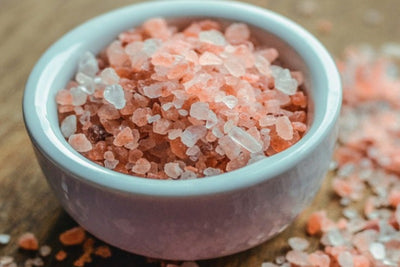
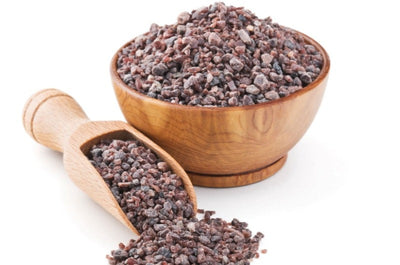
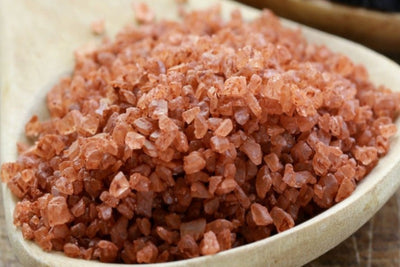
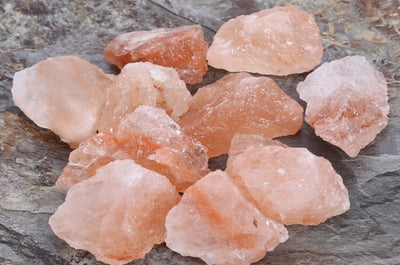
Have a look through a bag of coarse Himalayan salt and you will probably find several colours. One crystal might be pale pink. The next could be much darker or have an orange patch running through it.
That is just part of the natural rock salt.

What Does Himalayan Salt Water Taste Like?
There is no great surprise here. It tastes salty.
Some people think Himalayan salt has a slightly different taste from ordinary white salt. Other people barely notice a difference.
The amount you use will probably make a much bigger difference than the type of salt.
Once it has dissolved, it does not really matter whether you started with fine salt or large crystals either. The grain size matters much more when you are using the salt on food.
Adding Lemon
You will quite often see lemon added to Himalayan salt water.

Lemon gives the water a sharper flavour and takes away some of the plain salty taste.
Himalayan Salt Water and Electrolytes
The word “electrolytes” comes up a lot whenever Himalayan salt water is mentioned.
The salt contains sodium and chloride. It can also contain much smaller amounts of other minerals.
That does not make every homemade glass of salt water the same as an electrolyte drink bought for a particular purpose.
A prepared electrolyte product will have its ingredients and amounts listed on the label. With homemade salt water, the amount depends entirely on how much salt somebody decided to add.
That is quite an important difference.

Can Himalayan Salt Water Help With Weight Loss?
This is another claim that gets attached to it.
You may see articles saying Himalayan salt water removes toxins, clears the bowels or stops cravings.
Those are not claims that should be treated as established benefits of the drink.
Himalayan salt does not really need to be sold that way in the first place.
It already has an obvious everyday use.
It is salt.
So Why Do People Drink Himalayan Salt Water?
It may be something they have seen online and wanted to try.
Others may like the taste.
There does not have to be a bigger reason.
The problem starts when a very simple mixture of salt and water gets surrounded by claims about detoxing, weight loss, sleep, digestion or other health effects.
Strip all of that away and there is not much mystery left.
Himalayan salt water is exactly what it sounds like.
Pink salt. Water. That is about it.
